Guide
What Is a Sump Pump?
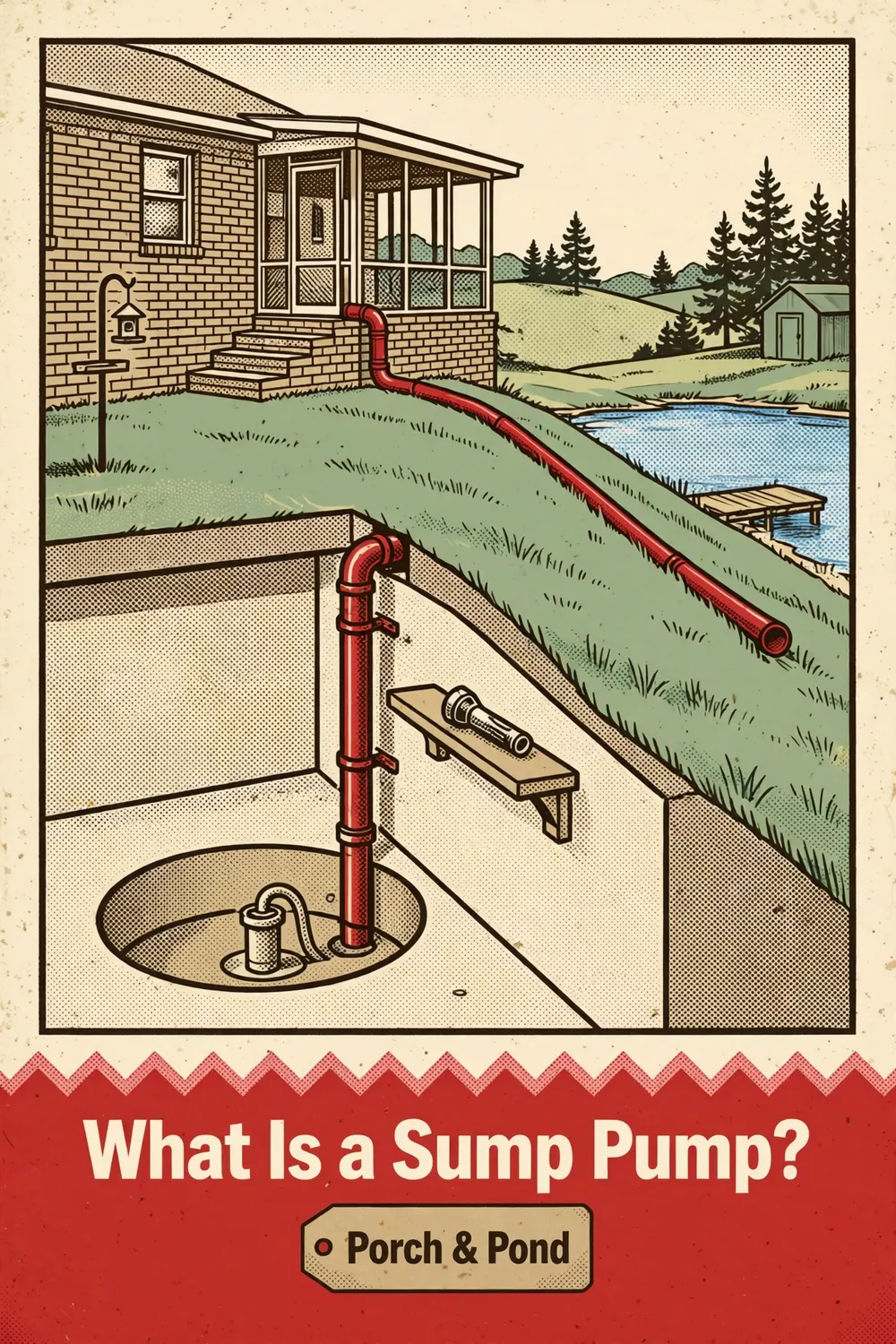
A sump pump is a pump that sits in a pit at the low point of a basement or crawl space and moves groundwater out of the house before it reaches the floor. Water drains into the pit, a switch turns the pump on as the level rises, and a pipe carries the water outside and away from the foundation. The sump pump is the only thing in this house that works harder when it rains. I relate.
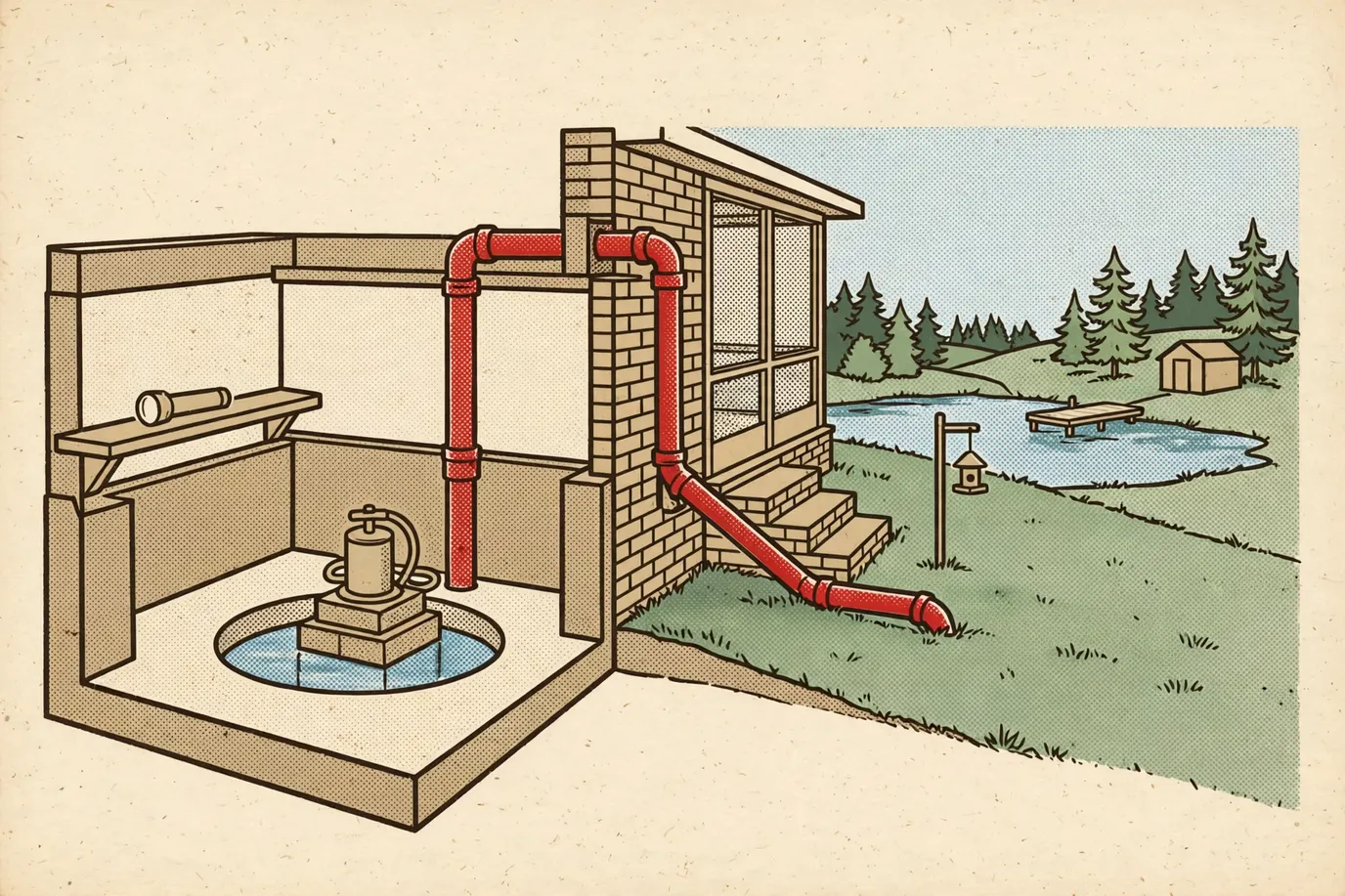
What is a sump pump, in plain words
A sump pump is the basement's way of bailing itself out. Water that soaks into the ground around your foundation follows drain lines or gravel to the lowest point, which is a pit in the basement floor called a sump. The pump in that pit lifts the water up and sends it outside before it can spread across the floor.
FEMA describes it this way: sump pumps draw in groundwater from around the house and direct it away through drainage pipes, and they can be an excellent defense against basement seepage and flooding.
Here's the thing most people miss. A sump pump doesn't fix a wet basement by itself. It's one part of a system: the drains that feed the pit, the pit, the pump, the switch, the pipe and the spot where the water ends up outside. If any one of those quits, the whole system quits.
Down in our basement, the pit sits in the corner under the stairs. I've spent 34 years in other people's crawl spaces, so I know a good pit when I see one. Ours is a good pit. It also has opinions about rain.
How does a sump pump work
The cycle repeats every time water comes in:
- Water drains into the pit. Groundwater from around the foundation collects at the low point.
- The switch turns the pump on. A float rides up on the rising water. At a set height it switches the pump on.
- The pump pushes the water up and out. It goes up a discharge pipe, out through the wall and away from the house.
- The check valve holds it. A check valve is a one-way flap on the discharge pipe. It stops the water in the pipe from running back down into the pit when the pump stops.
- The pump shuts off. As the level drops, the float drops, and the pump turns off.
Community Association Underwriters of America, an insurer, notes that without a check valve, pumped water can flow back into the pit and make the pump turn on and off more than it needs to. The City of Ann Arbor's maintenance checklist adds one more small part: a weep hole, a small hole in the discharge pipe just above the pump that prevents an air lock. If you see a little spray from that hole when the pump runs, that's on purpose.
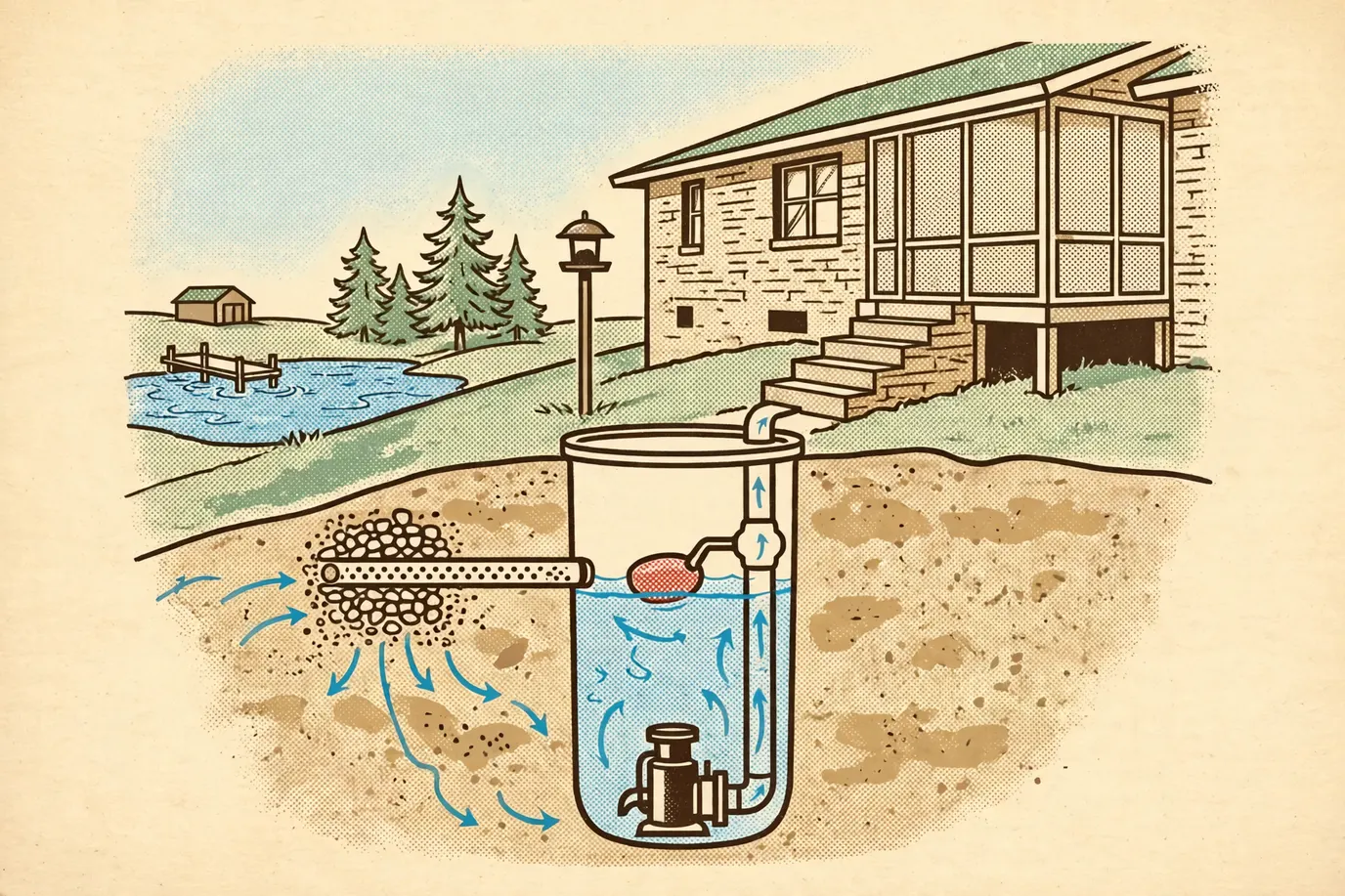
The parts of a sump system
| Part | What it does | What to check |
|---|---|---|
| Pit (sump) | Collects groundwater at the basement's low point | Silt, sand or debris in the bottom |
| Pump | Lifts the water up and out | Sits level; debris kept below the intake |
| Float switch | Turns the pump on as water rises | Moves freely; doesn't touch the pit walls |
| Check valve | Stops water running back into the pit | Present on the discharge line above the pit |
| Weep hole | Prevents an air lock in the pipe | Clear, not plugged |
| Discharge pipe and outlet | Carries water out and away | No leaks, no blockage, outlet clear outside |
Sources: City of Ann Arbor maintenance checklist; City of Superior, Wisconsin, maintenance tips.
Pedestal vs. submersible: the two main types
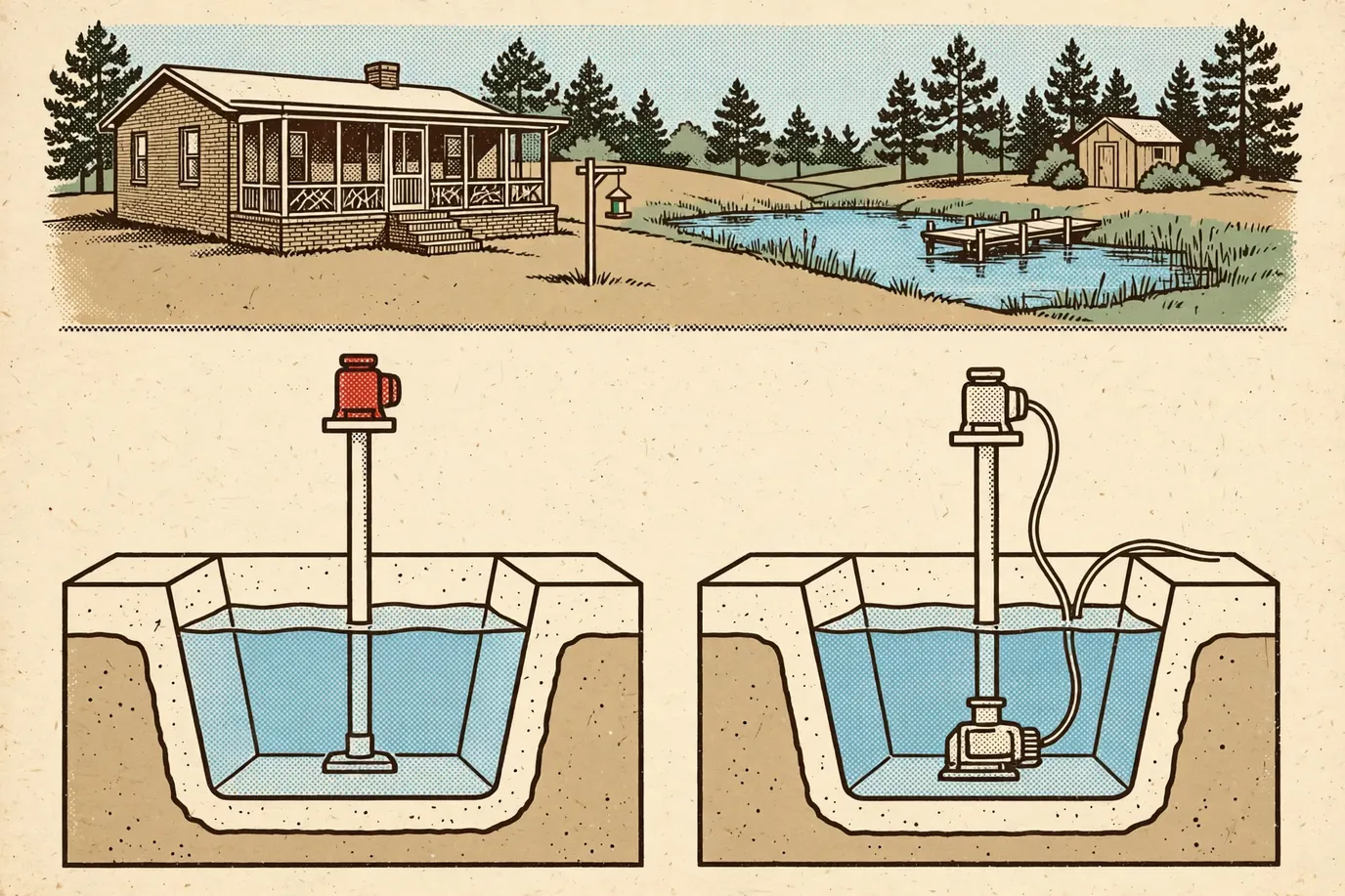
Most home sump pumps come in two styles.
- Pedestal. The pump stands in the pit with the motor up on a column above the water, where it's meant to stay dry. Community Association Underwriters of America says pedestal pumps are noisier.
- Submersible. The whole pump sits down in the pit, under water, with a sealed motor. The same guide says submersibles are much quieter and tend to have a longer life expectancy, because the sealed motor keeps moisture and dirt out.
Both use a switch that turns the pump on when the water reaches a set level. The switch can be a float on an arm, a vertical float on a rod, or an electronic sensor; the maker's listing says which.
Rule of thumb: size a pump to your pit and to how high it has to push the water, not to the biggest horsepower on the shelf. Flow drops as the lift rises, so the number that matters is the flow at your lift, and makers list it by height. Our sump pump page lays those numbers side by side.
How often should a sump pump run
There's no fixed number. A sump pump runs when water comes in, so it works hard in a wet spring and may sit idle through a dry August.
A few signs tell you whether yours is running right:
- Runs after heavy rain or snowmelt, then rests. That's normal.
- Never runs, even after storms. Pour water into the pit to check that it still turns on. The City of Ann Arbor says three to four gallons is usually enough to start it.
- Runs all the time. Ann Arbor's checklist says a pump shouldn't have to. Check the float setting first; if water still reaches the top of the pit, the pump may be too small for the job.
- Short bursts, on and off. A missing or failed check valve can cause that.
The City of Superior, Wisconsin, adds a point about dry spells: if the pit stays dry for a long time, the pump's seals can dry out and crack. Its tip is to test once a month by adding enough water to start the pump.
(I test ours more often than that. The pit has never once complained about the attention.)
Where does sump pump water go
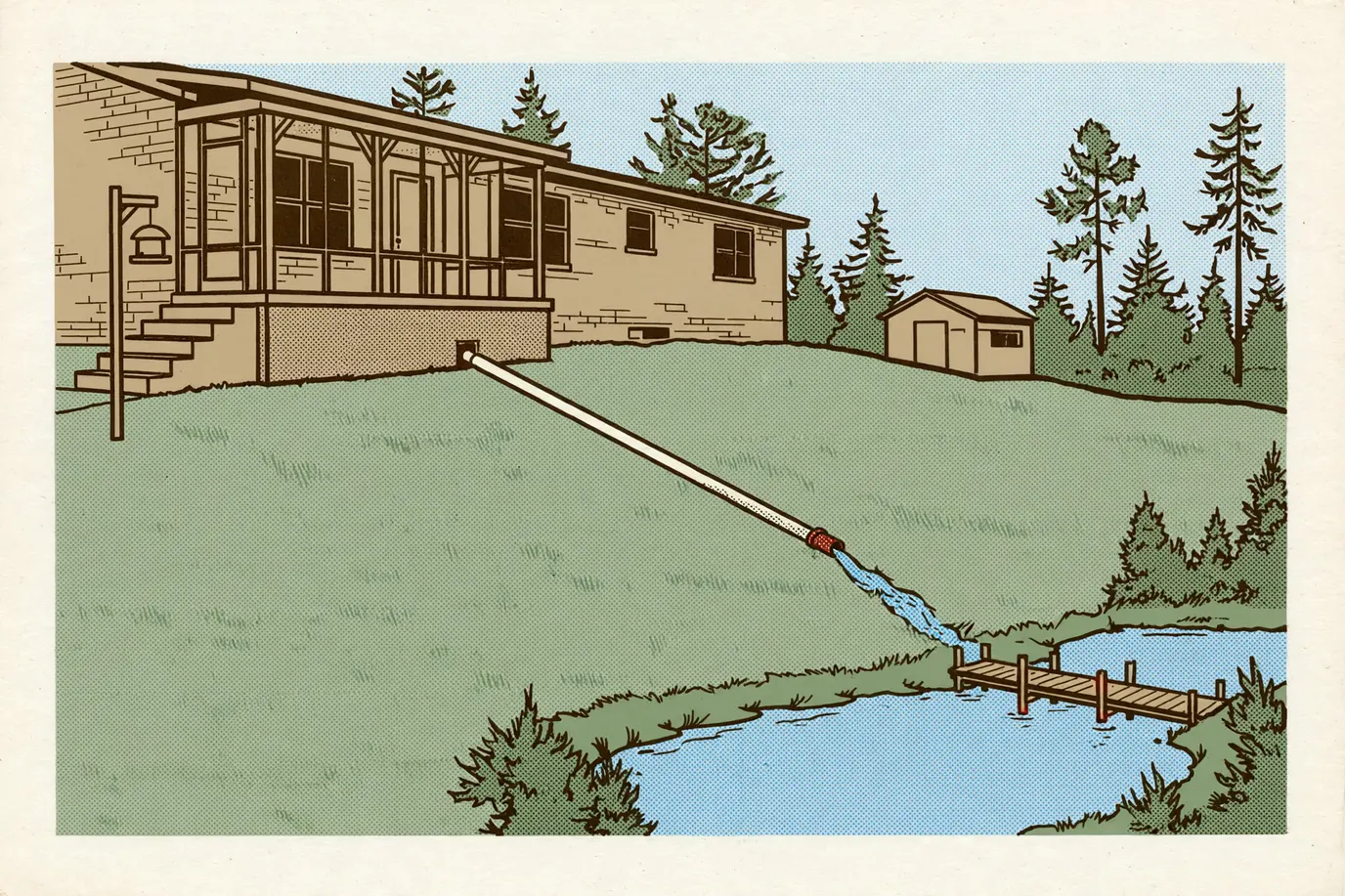
Outside, and away. The discharge pipe should carry the water to a spot where it drains away from the house instead of soaking back down to the foundation and into the pit again.
Where it's allowed to go depends on your town:
- The yard. The most common setup. The outlet should sit where the ground carries water away from the house.
- An underground pipe to the storm sewer or a buried drain, where your town allows it. Ann Arbor's checklist describes an air gap at the house wall where the discharge drops into a larger pipe.
- Not the sanitary sewer. Community Association Underwriters of America notes that local codes prohibit directing pump discharge into the municipal sewer system.
Check with your local building department before you change where your discharge goes. Ana's ruling: the water goes downhill toward the pond, the pond can have it, and nobody asks the neighbors to share.
Do I need a sump pump
Some houses do, some don't.
- Your house has a sump pit. Then you need a working pump in it. A pit with no pump is just a hole that fills up.
- Your basement gets water after rain or snowmelt. A sump system is worth asking a plumber about. FEMA lists installing a sump pump among its flood-protection projects, with a battery-operated backup in case the power fails.
- Your basement has never had water and there's no pit. You probably don't need a sump pump. You need a gutter check, downspouts that carry water away, and soil that slopes away from the foundation.
If you do have one, a backup and a high-water alarm deserve a look too. The City of Ann Arbor's backup guide lists power loss, a stuck float, a burned-out pump, a clog, a failed check valve, a blocked discharge pipe and more water than the pump can handle among the reasons pumps fail. Most of those happen during storms, which is exactly when you need the pump.
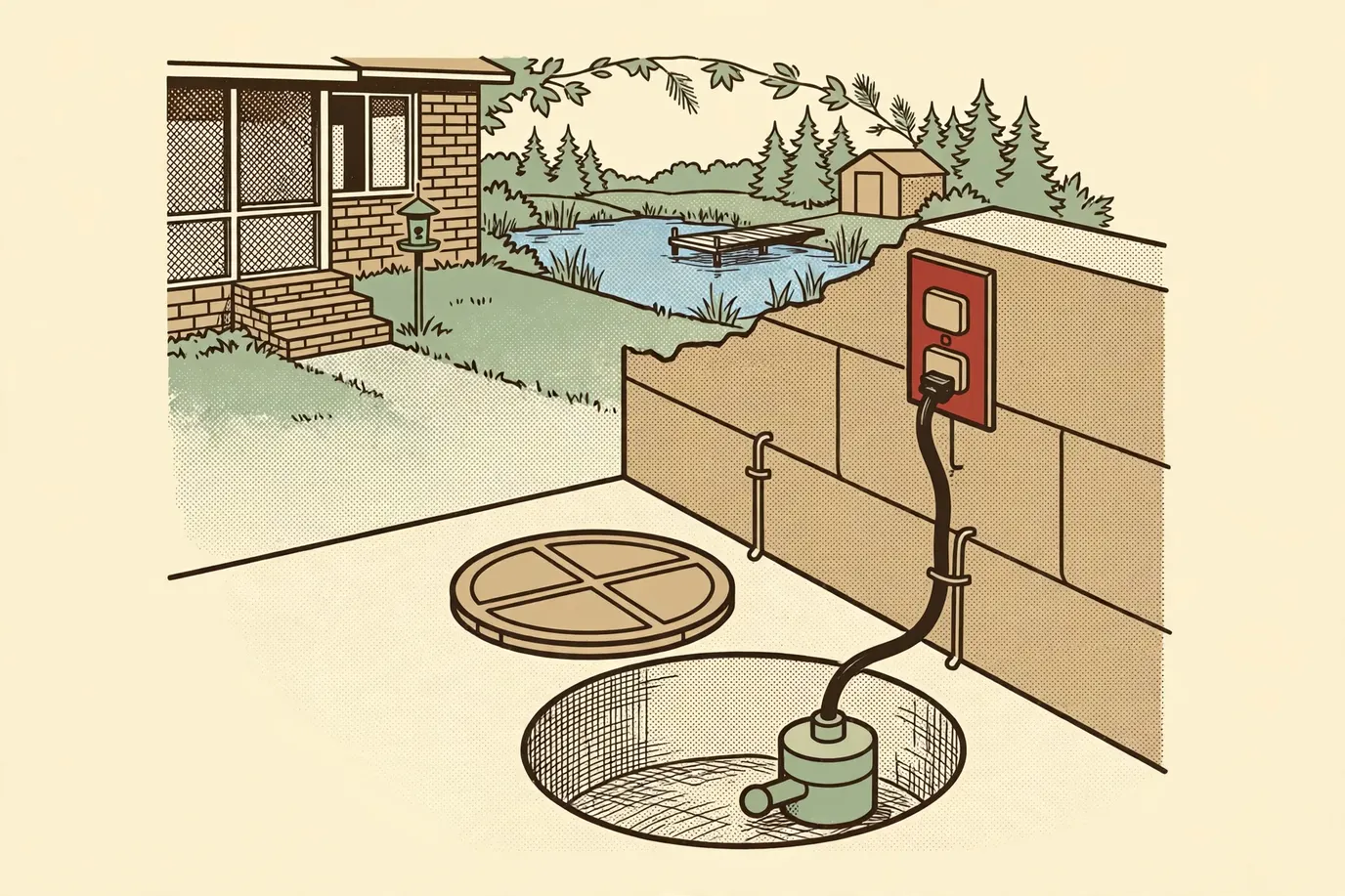
Plug water equipment only into a GFCI-protected outlet, unplug it before you touch the water or the pump, and leave hard-wired installs to a licensed electrician.
Simple care, twice a year
Ann Arbor suggests checking your sump pump at least twice a year, ideally before the spring melt. Unplug it first. Then:
- Clear silt and debris from the bottom of the pit.
- Make sure the float moves freely.
- Check the weep hole and the check valve.
- Look over the discharge pipe for leaks.
- Plug it back in and pour in water to watch it cycle.
- Walk outside and make sure the outlet isn't buried in leaves.
Read the plate first, then the manual. The maker's instructions come before any general list, this one included.
Keep it dry.
Questions people ask
How does a sump pump work?
Groundwater from around the foundation drains into the sump pit. When it rises to a set level, a float switch turns the pump on, and the pump pushes the water up a discharge pipe and outside. A check valve on that pipe keeps the water from running back into the pit when the pump shuts off.
How often should a sump pump run?
As often as water comes in, which depends on rain, snowmelt and your water table. In dry spells it may not run at all. The City of Ann Arbor's checklist says the pump should not have to run all the time; if it does, the float setting, the pump size or the drainage around the house needs a look.
Where does sump pump water go?
Outside, through the discharge pipe, to a spot where it drains away from the house: the yard, or in some towns an underground pipe to the storm sewer. Community Association Underwriters of America notes that local codes prohibit sending it into the municipal sanitary sewer. Ask your building department what's allowed where you live.
Do I need a sump pump?
If your house already has a sump pit, it needs a working pump in it. If your basement gets water after heavy rain or snowmelt, a sump system is worth asking a plumber about; FEMA calls sump pumps an excellent defense against basement seepage and flooding. If your basement has never had water and there's no pit, start with gutters and grading.
What is the difference between a pedestal and a submersible sump pump?
A pedestal pump stands in the pit with its motor up above the water, where it's meant to stay dry. A submersible pump sits down in the pit with a sealed motor under water. Community Association Underwriters of America says submersibles are quieter and tend to last longer, and pedestal pumps are noisier.
Save this guide for later
Sources
- FEMA: Protect Your Home from Flooding — Low-Cost Projects You Can Do Yourself (2020) — accessed 2026-10-24
- City of Ann Arbor, Michigan: Sump Pump Maintenance Checklist — accessed 2026-10-24
- City of Ann Arbor, Michigan: Sump Pump Backup Options — accessed 2026-10-24
- City of Superior, Wisconsin: General Sump Pump Maintenance and Cleaning Tips — accessed 2026-10-24
- Community Association Underwriters of America: Avoiding Problems with Sump Pumps (Risk Management Guide P-7, 2011) — accessed 2026-10-24