Guide
How Long Do Sump Pumps Last?
Sump pumps typically last about 5 to 7 years, and how hard the pump works decides where in that range yours lands. An insurer's loss-control guide suggests planning to replace a sump pump every 5 to 7 years even if it still runs, and the City of Ann Arbor says backup batteries should be replaced every three years. Rule of thumb: write the install date on the pipe, because nobody remembers it when the rain starts.
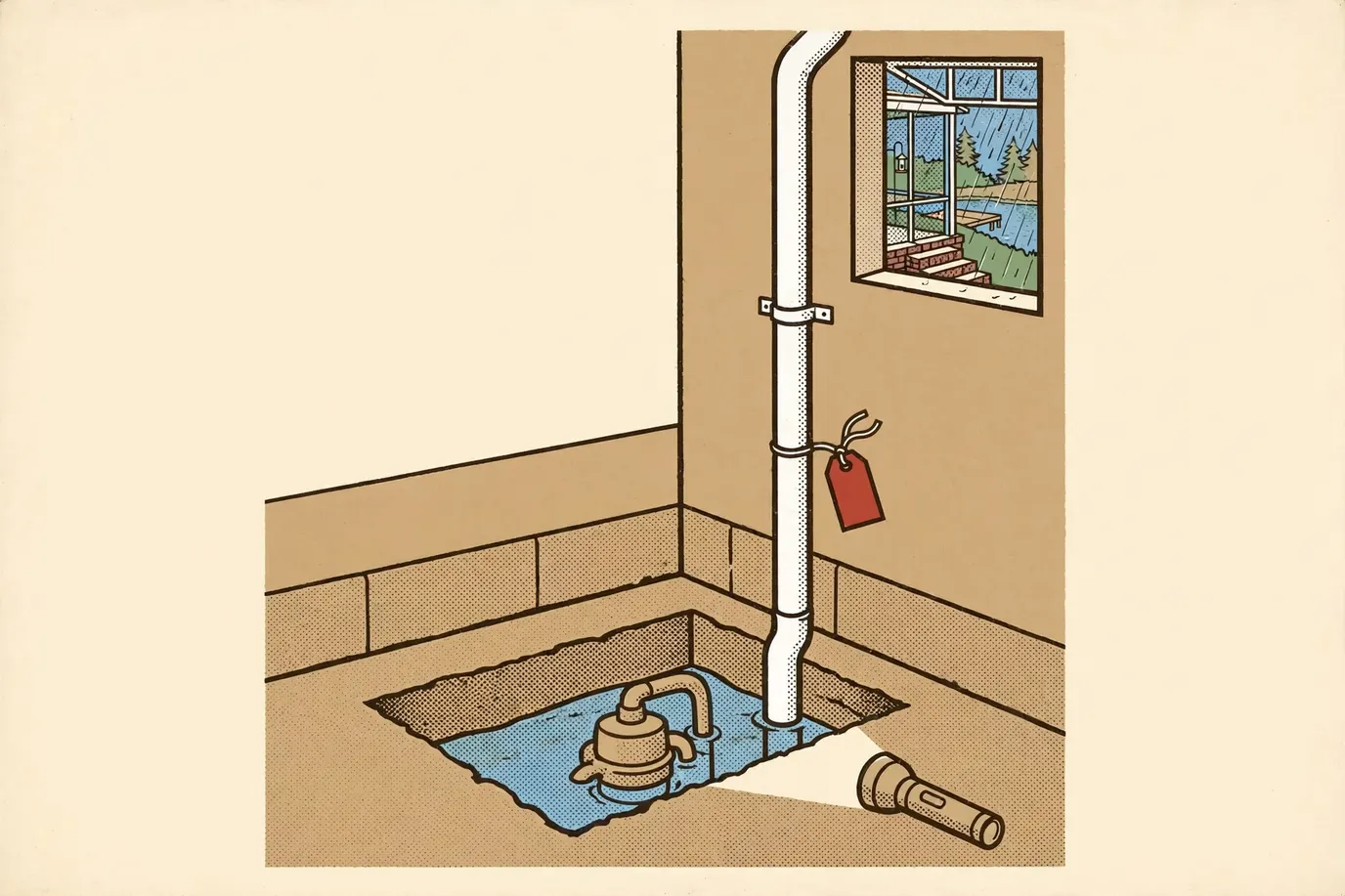
How long do sump pumps last: the short version
A sump pump is a working machine, and like a water heater or a refrigerator it wears out. The City of Ann Arbor puts it plainly in its backup guide: a sump pump is a mechanical appliance, and it can wear out or break down.
The number most often cited in the sources I trust is 5 to 7 years. Community Association Underwriters of America, an insurer that writes guides for the buildings it covers, calls that the typical life span and says it varies with use. A pump in a dry basement that runs a few times a year has an easier life than one that runs every hour of a wet spring.
Here's what the sources say, side by side:
| Part | How long, or how often | Source |
|---|---|---|
| Primary sump pump | Typical life span 5–7 years; plan to replace every 5–7 years even if it still works | Community Association Underwriters of America |
| Backup battery | Replace every 3 years | City of Ann Arbor |
| Battery backup run time in an outage | Generally 7–24 hours of pump operation | City of Ann Arbor |
| Full check of the system | At least twice a year, ideally before the spring melt | City of Ann Arbor |
| Water test in dry spells | Once a month | City of Superior, Wisconsin |
None of these are promises about a particular pump. The maker's manual and warranty tell you what that pump was built for. Read the plate first.
What wears a sump pump out
Most pumps don't just die of old age. Something speeds it up.
- Hard work. More water means more cycles, and every cycle is wear on the motor and the switch.
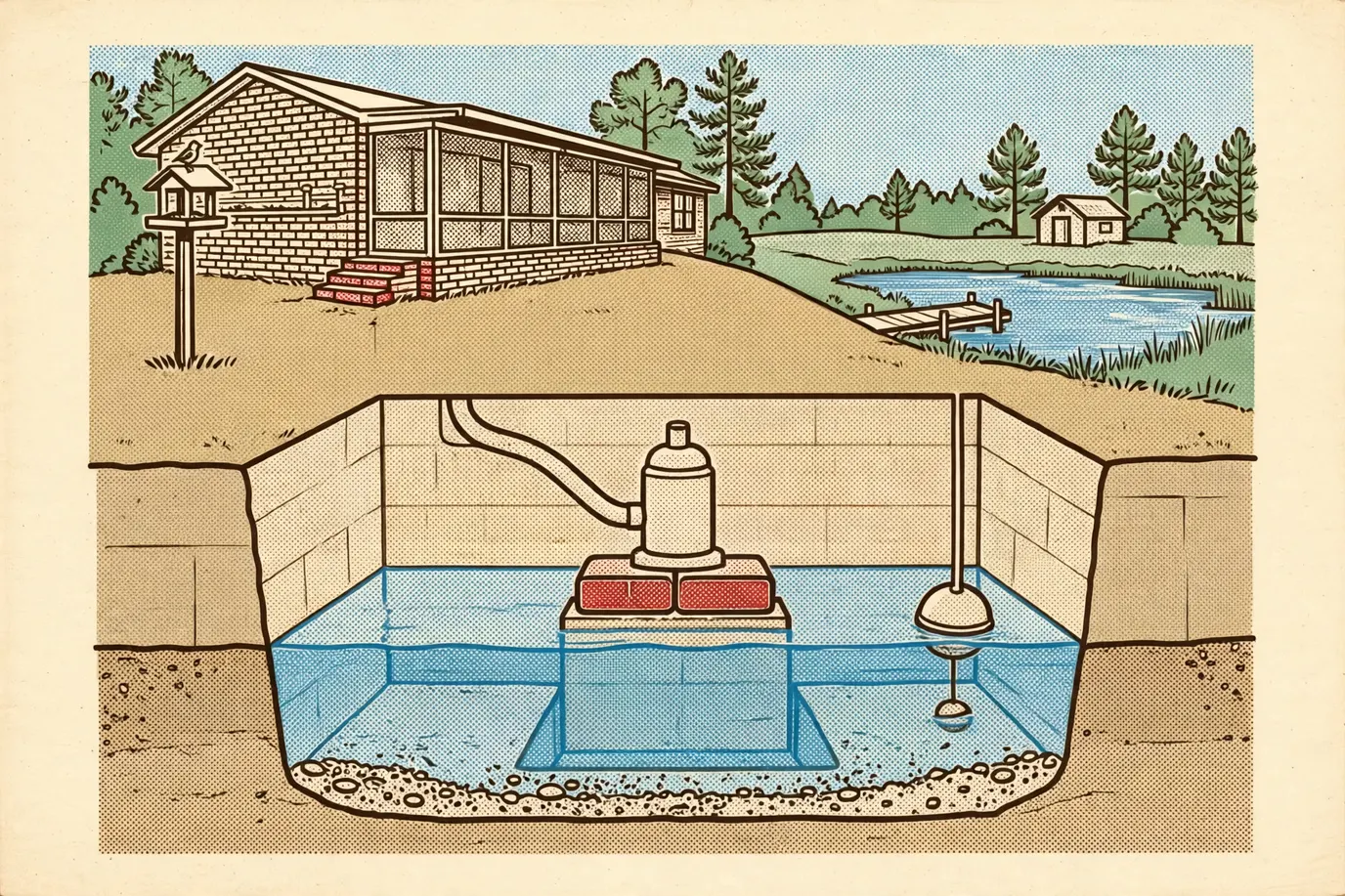
- Debris. The City of Superior, Wisconsin, says a typical sump pump is built to move water, not dirt, sand or concrete chips, and abrasive material wears it out early. Its fix: set the pump on bricks or a concrete block so debris stays below the intake.
- Dry spells. Superior also warns that if the pit stays dry, the seals can dry out and crack. A monthly water test keeps them wet.
- A stuck float. If the float rubs the pit wall, the pump may not start, or may not stop. Ann Arbor's checklist asks you to make sure it moves freely.
- Short cycling. Without a check valve, pumped water runs back into the pit and the pump turns on and off more than it needs to, which Community Association Underwriters of America flags.
- Hot water or chemicals. Superior says not to use a sump pump for water over 120°F, flammable liquids, chemicals or salt water.
Pump style matters too. The same insurer's guide says submersible pumps tend to have a longer life expectancy than pedestal pumps, because the sealed motor keeps moisture and dirt out.
I spent 34 years in other people's crawl spaces. The spiders and I have an understanding. The sump pumps and I have a different one: I check on them, and they don't surprise me.
Signs your sump pump is near the end
Age is the first sign. If you don't know how old yours is, assume it's older than you'd like and look it over.
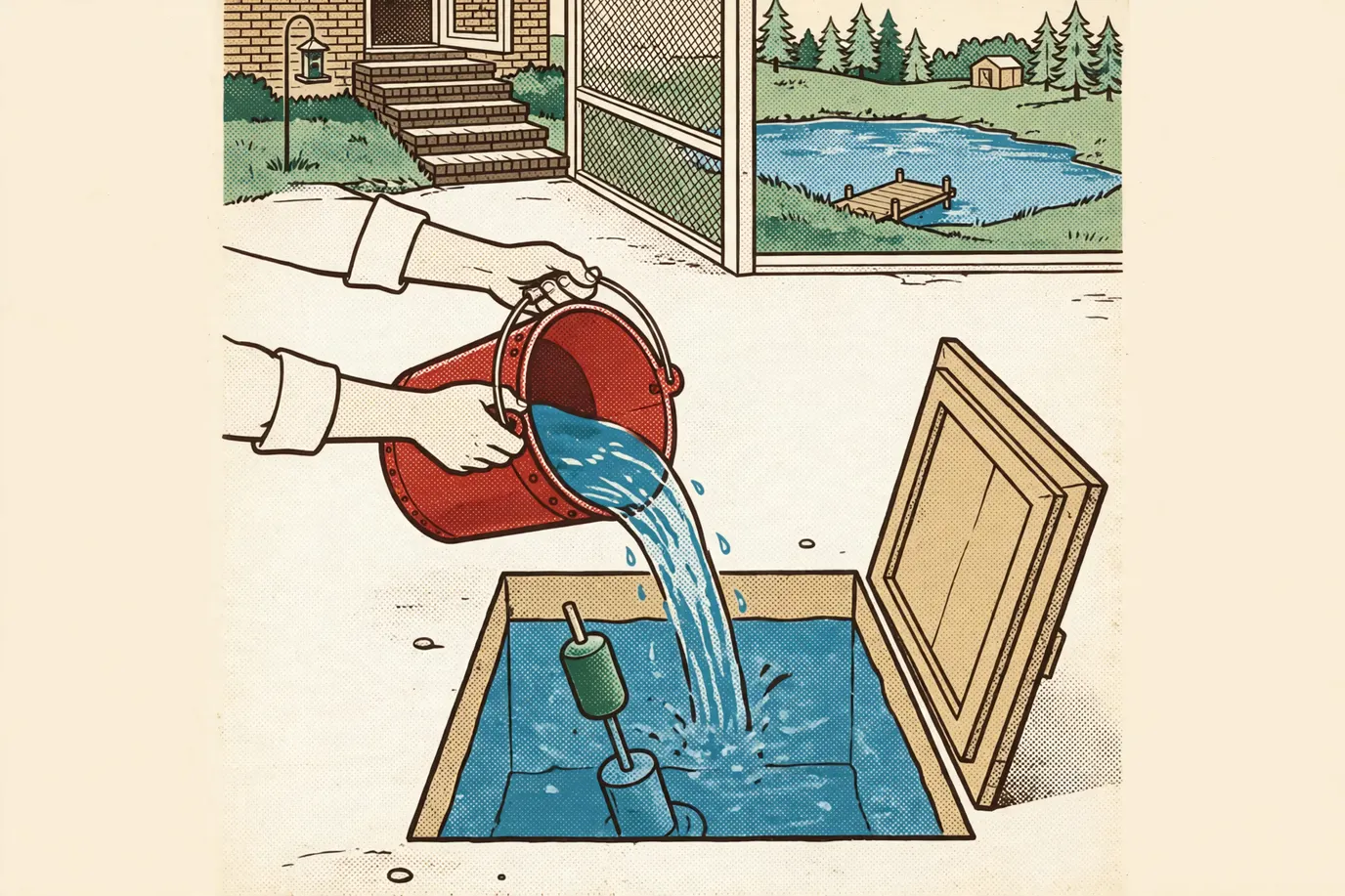
- It fails a water test. Ann Arbor says three to four gallons poured into the pit is usually enough to start the pump. If it doesn't start, or starts and won't stop, something's wrong.
- It runs all the time. Ann Arbor's checklist says a pump shouldn't have to. Check the float first; if water still reaches the top of the pit, the pump may be undersized or worn.
- Water rises over the pump before it turns on. On pumps with a preset sensor switch, Ann Arbor says that can point to a bad sensor.
- Corrosion or leaks on the pump, the connections or the discharge pipe.
- It's past 5 to 7 years. Even a quiet, working pump has used up its typical span by then.
If a pump fails one of these, that's a call for a pro or a new pump, not a hope for dry weather.
How long does a sump pump battery last
The phrase means two different things, so here are both answers.
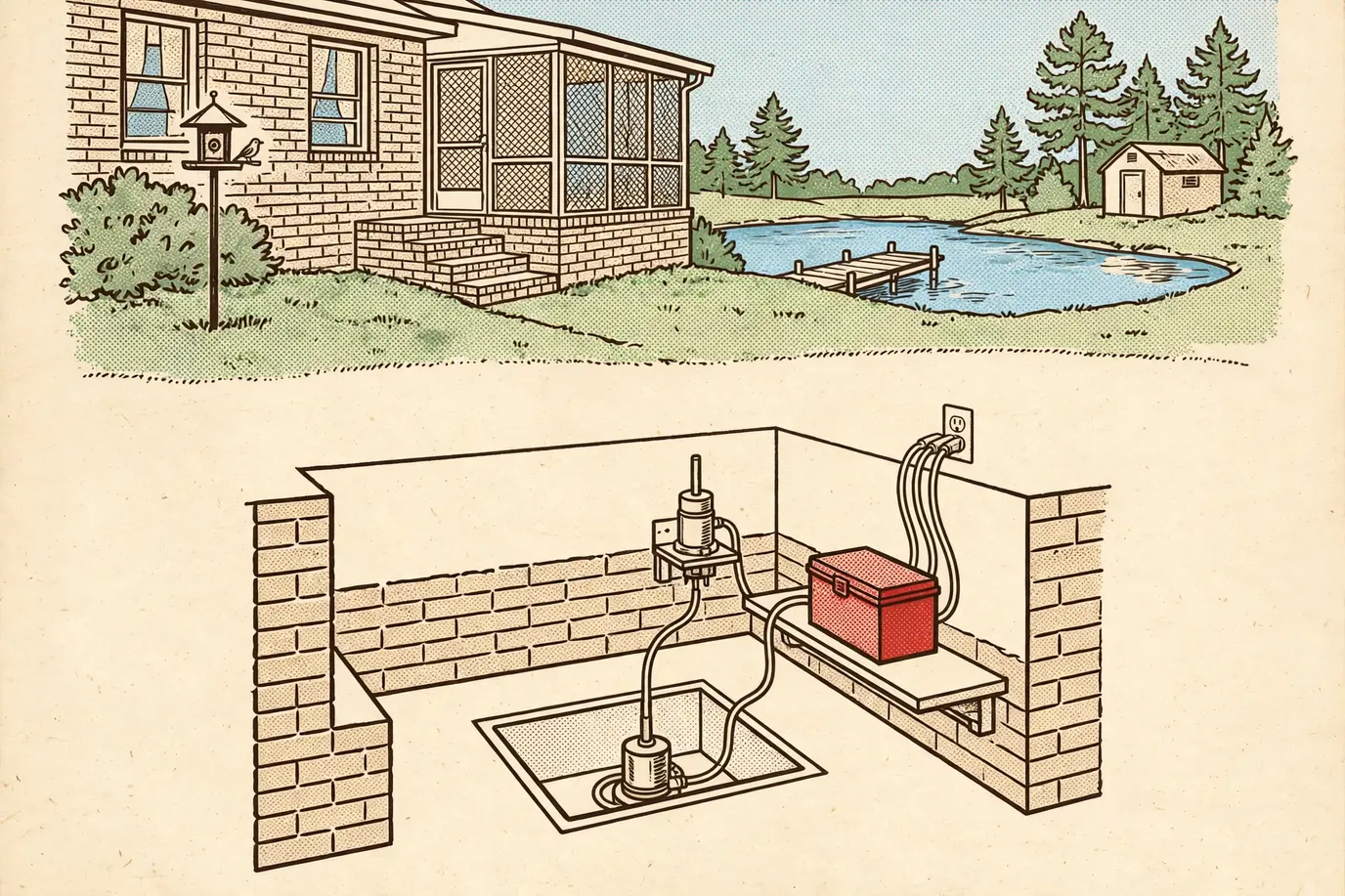
How long the battery lasts as a part. The City of Ann Arbor's backup guide says batteries must be replaced every three years. It also says unsealed batteries need their distilled water level checked. Write the install date on the battery box.
How long it runs the pump in an outage. Ann Arbor puts battery life at generally 7 to 24 hours of pump operation. The real number depends on the battery, how much water is coming in and how often the backup pump has to cycle.
Battery backup pumps also tend to move less water than the main pump. They're built to hold the line until the power comes back, not to replace the primary.
The September basement
In September 2018 the tail of a hurricane parked over the Piedmont and rained for days. On the second night, the power went out. The pump in our pit stopped with it, and by the time I had a generator running the basement had an inch of water on the floor.
An inch doesn't sound like much. It's plenty. Ana's ruling at the time was that the basement had finally said what it thought of the weather, and I couldn't argue.
The pump didn't fail that night. The power did, and the pump went with it. That's why I keep the pit lid off for a look every storm now, and why I'll say this as my one firm opinion: a battery backup or a high-water alarm is part of a sump setup, not an extra. The main pump stops exactly when the power does. FEMA says the same thing in its flood-protection guide: choose a sump pump with a battery-operated backup in case the power fails.
How to make a sump pump last longer
You can't make a pump last forever. You can keep it from wearing out early.
- Check it twice a year. Ann Arbor says at least twice a year, preferably before the spring melt. Unplug it first.
- Clean the pit. Remove silt, sand and debris from the bottom.
- Lift it off the floor. Bricks or a block under the pump, as Superior suggests.
- Free the float. Nothing touching it, nothing in its way.
- Keep the weep hole and check valve working. The weep hole is a small hole in the discharge pipe above the pump that stops air locks.
- Test it in dry weather. Water in the pit once a month.
- Write the date down. Pump, battery and check valve.
If your backup is water-powered instead of battery-powered, Ann Arbor says its backflow preventer needs testing by a licensed certified plumber every 3 years there; check your own town's rules.
Plug water equipment only into a GFCI-protected outlet, unplug it before you touch the water or the pump, and leave hard-wired installs to a licensed electrician.
Repair or replace
Some problems are parts, not the pump. Ann Arbor's backup guide notes that faulty switches can be changed relatively cheaply, and a repaired pump can go back into service as a spare. A clogged discharge pipe or a stuck float isn't a dead pump either.
Replace the pump when it's past its typical span and showing wear, when it fails a water test after you've cleared the pit and the float, or when the motor itself quits. Keep the model number written down, as Superior suggests, so a replacement goes in fast.
Keep it dry.
Questions people ask
How long does a sump pump battery last?
Two answers. As a part, the City of Ann Arbor says backup batteries must be replaced every three years. During an outage, the same guide puts a battery backup's run time at generally 7 to 24 hours of pump operation, depending on the battery and how often the pump has to run. Check your backup's manual for the battery type it calls for.
How often should a sump pump be replaced?
Community Association Underwriters of America suggests planning to replace a sump pump every 5 to 7 years, even if it still works, because that's the typical life span. Replace it sooner if it fails a water test, runs constantly when it shouldn't, or the float sticks.
Do submersible sump pumps last longer than pedestal pumps?
They tend to. Community Association Underwriters of America says submersible pumps have a longer life expectancy because the sealed motor keeps moisture and dirt out. A pedestal pump's motor sits above the pit, where it's meant to stay dry.
What makes a sump pump fail early?
Debris and dry spells are two common causes. The City of Superior, Wisconsin, says sand, dirt and concrete chips wear a pump out early, and that seals can dry out and crack if the pit stays dry. Its advice: set the pump on bricks or a block, and test it monthly by adding water.
Save this guide for later
Sources
- Community Association Underwriters of America: Avoiding Problems with Sump Pumps (Risk Management Guide P-7, 2011) — accessed 2026-10-24
- City of Ann Arbor, Michigan: Sump Pump Backup Options — accessed 2026-10-24
- City of Ann Arbor, Michigan: Sump Pump Maintenance Checklist — accessed 2026-10-24
- City of Superior, Wisconsin: General Sump Pump Maintenance and Cleaning Tips — accessed 2026-10-24
- FEMA: Protect Your Home from Flooding — Low-Cost Projects You Can Do Yourself (2020) — accessed 2026-10-24