Guide
How to Plant Tulip Bulbs
To plant tulip bulbs, loosen a sunny, well-drained bed, set each bulb pointed end up 6 to 8 inches deep for large tulips, space them 4 to 6 inches apart, cover, and water once. Smaller species tulips go 3 to 5 inches deep and 3 to 4 inches apart. That's the whole job; the rest of this page is the details that keep it from going wrong.
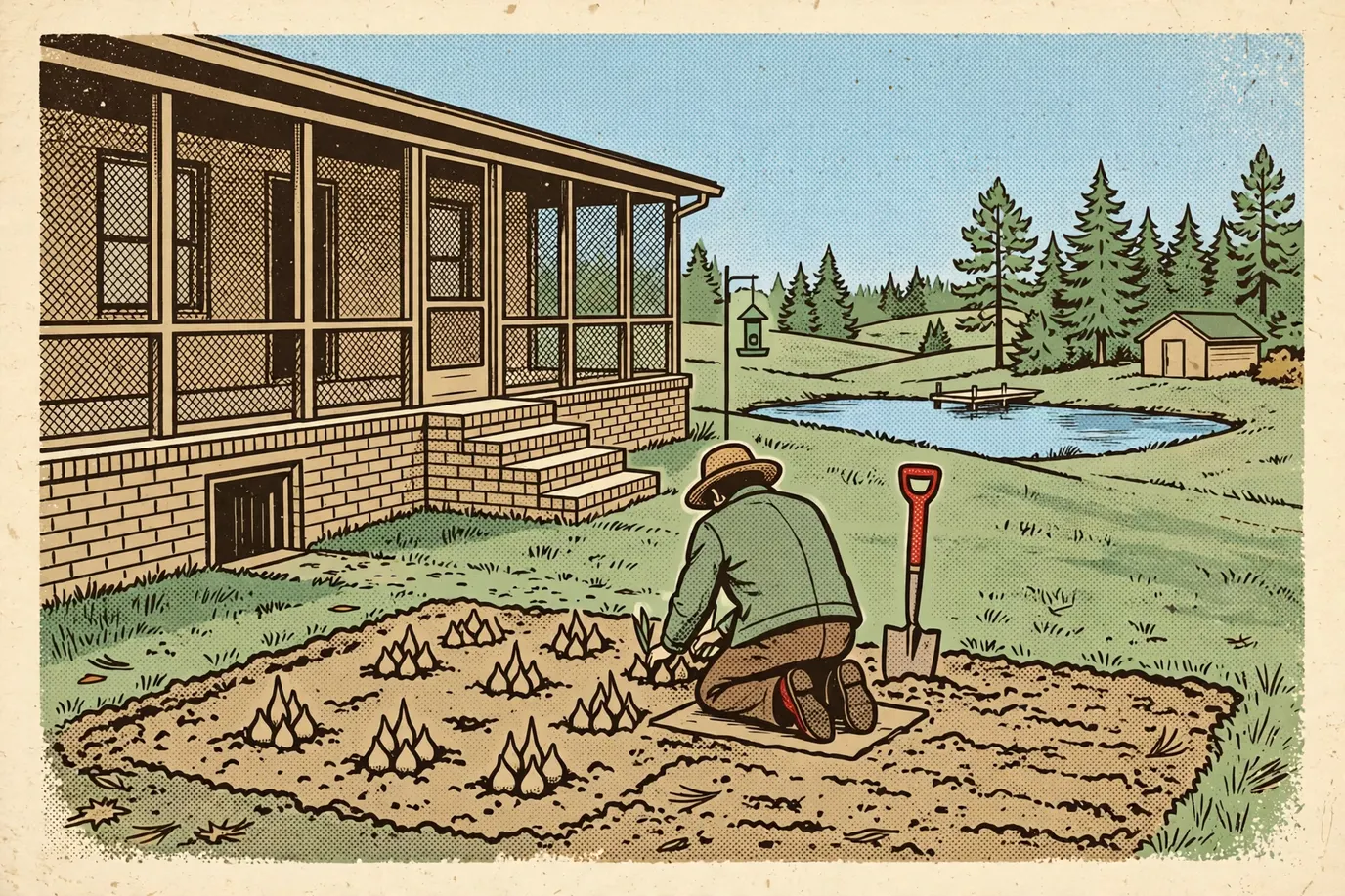
How to plant tulip bulbs in five steps
Tulip planting is mostly about three numbers and one direction. The numbers are depth, spacing and group size; the direction is up. Here's the job in the order you'd do it:
- Pick a sunny, well-drained spot. Iowa State University Extension says tulips do best in full sun and tolerate part sun.
- Loosen the whole bed to planting depth, and work in compost if the soil is heavy.
- Set the bulbs pointed end up, 6 to 8 inches deep for large tulips.
- Space them 4 to 6 inches apart, in groups rather than single rows.
- Cover, water once, and mulch.
The timing of all this — when the soil is cool enough — has its own page: our guide to when to plant tulip bulbs. This one assumes the soil is ready and the bag is in your hand.
Choose a spot that drains
Drainage matters more than anything else on this list. Iowa State says wet soil leads to decline and rot, and Illinois Extension calls good drainage essential.
If your soil is heavy clay, as ours is here in the Piedmont, work compost, peat moss or another organic material into the top 12 inches. Illinois Extension says 18 inches is better. That's a lot of digging. It's also the difference between a bed that lasts and a bed that puddles.
Illinois Extension also suggests a soil pH between 6 and 7 and a soil test before adding lime. Your county extension office can tell you how to send a sample.
How deep to plant tulip bulbs
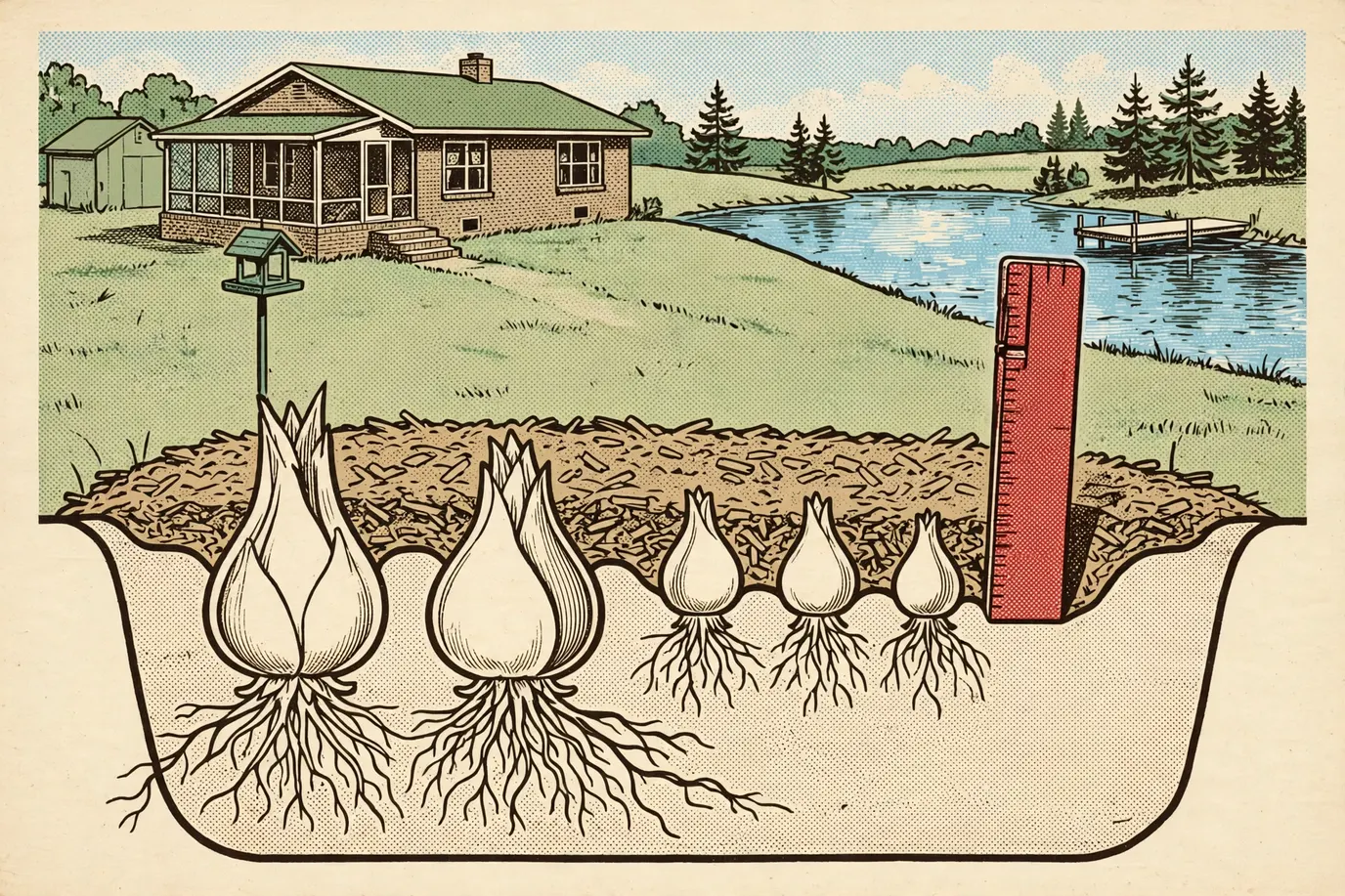
Depth depends on the bulb's size, and both extension services give the same answer in slightly different words.
| Tulip type | Depth | Spacing | Source |
|---|---|---|---|
| Larger tulips (most garden tulips) | 6–8 in | 4–6 in apart | Iowa State University Extension |
| Smaller types (Kaufmanniana, Greigii, species tulips) | 3–5 in | 3–4 in apart | Iowa State University Extension |
| Rule of thumb for spring bulbs | 2–3 times the bulb's height, about 8 in for large bulbs | — | Illinois Extension |
Two details people miss:
- Depth is measured from the base of the bulb, not the tip. Illinois Extension is specific about this. A 6-inch hole means the bottom of the bulb sits 6 inches down.
- Pointed end up, root plate down. The root plate is the flat, slightly rough base.
Ken lent me a tape measure for the first bed of the season. Ken's take: "Measure from the bottom, mark it on the handle, and stop measuring." He has eleven tape measures, so I didn't feel too bad keeping it for a week.
How far apart to plant tulip bulbs
Iowa State spaces larger bulbs 4 to 6 inches apart and smaller types 3 to 4 inches apart. Use the closer number for small bulbs and the wider one for the big ones, and keep it even across the group.
Spacing also connects to how many you plant. Iowa State suggests at least five bulbs of one variety for large tulips, with 10 or more looking best, and drifts of at least 25 for the small types, with 50 or more looking best. A single straight row of tulips along a walk reads like a line of soldiers. A cluster reads like a garden.
Field note: I lay the whole group out on the soil before I cover any of them. It's easier to move a bulb two inches on the surface than to dig it back up. Also, if you count them while they're lying there, the number in your notebook will match the number in the ground, which in my experience is not a given.
The easy way to plant tulip bulbs: dig a bed, not holes
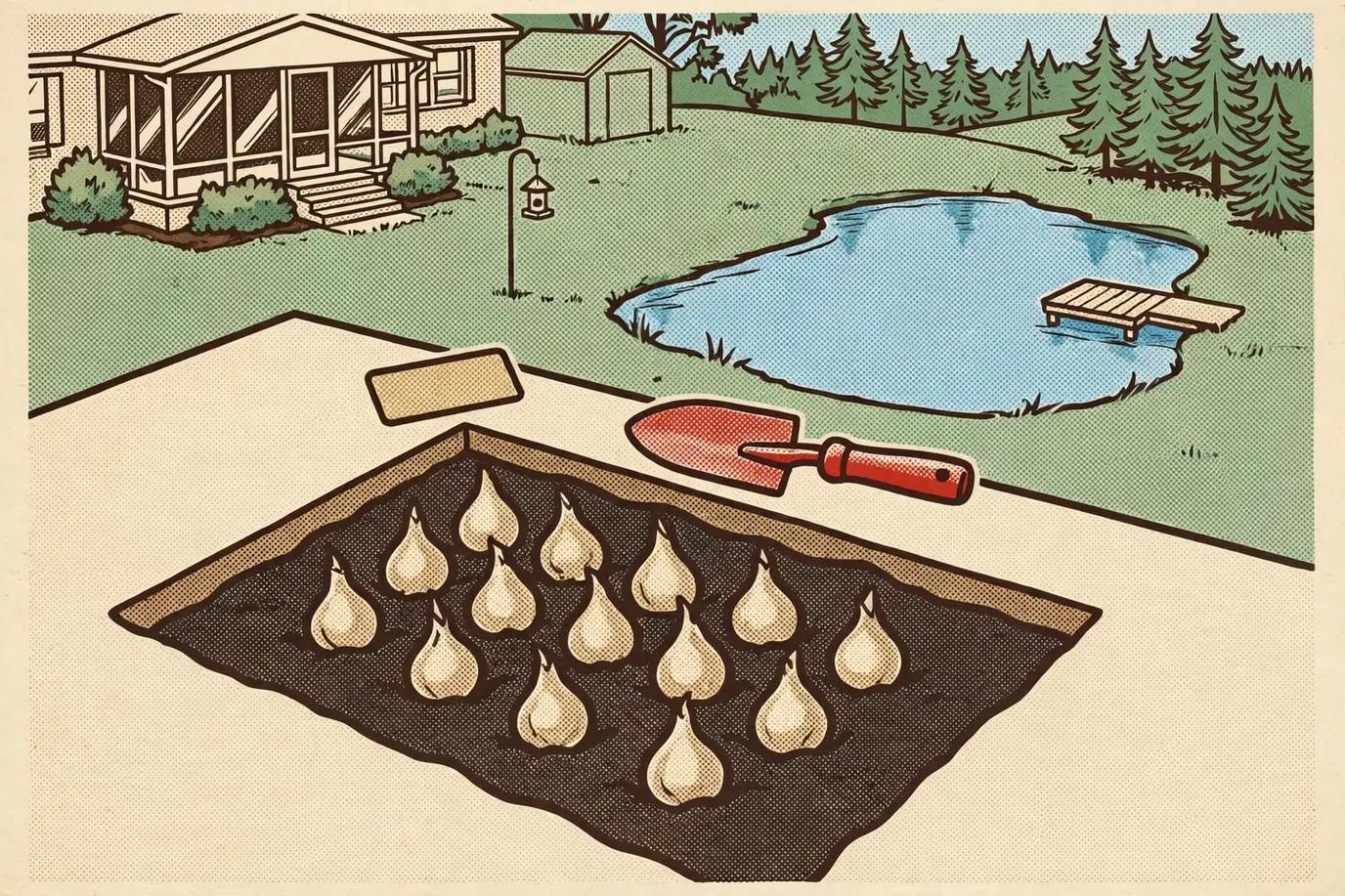
The easiest way to plant a group of tulips is to dig out the whole area to planting depth at once, set the bulbs on the bottom, and put the soil back.
Illinois Extension prefers this to planting one bulb at a time. A loosened bed drains better, and the bulbs all end up at the same depth without measuring each hole. It also notes that bulb planters often perform poorly in many soils.
That said, a bulb planter still earns its place in loose, workable soil, or for tucking a few bulbs into an existing bed between perennials. In heavy clay, a spade and a wide hole is the easier day. Ours is clay, and I've stopped arguing with it.
Fertilizer, water and mulch
Fertilizer. Iowa State says fertilizer typically isn't necessary at planting. If you do add some, put it where the roots will be. Illinois Extension explains that phosphorus, the nutrient that helps root growth, barely moves in soil, so it has to be mixed into the bed below the bulbs rather than sprinkled on top. Illinois also says a second feeding can go on when the shoots come up in spring, and that feeding stops once the flowers open. Follow the amounts on the bag.
Water. Water once after planting to settle the soil and get the roots started. Illinois Extension warns that overwatering can rot bulbs, so one good soaking is the job. In spring, once buds appear, give the bed about an inch of water a week if rain doesn't. Water deeply, since the bulbs sit 6 to 8 inches down, and Illinois suggests a soaker hose so the water stays off the flowers.
Mulch. Illinois Extension suggests 2 to 3 inches of mulch over the bed, with one exception: it says not to mulch small, early-blooming bulbs. Pine straw is what we have plenty of on Haw River Road, and the bed looks finished the minute it's down. (Dell calls it the only harvest on the property that never fails.)
After they bloom: what helps next year
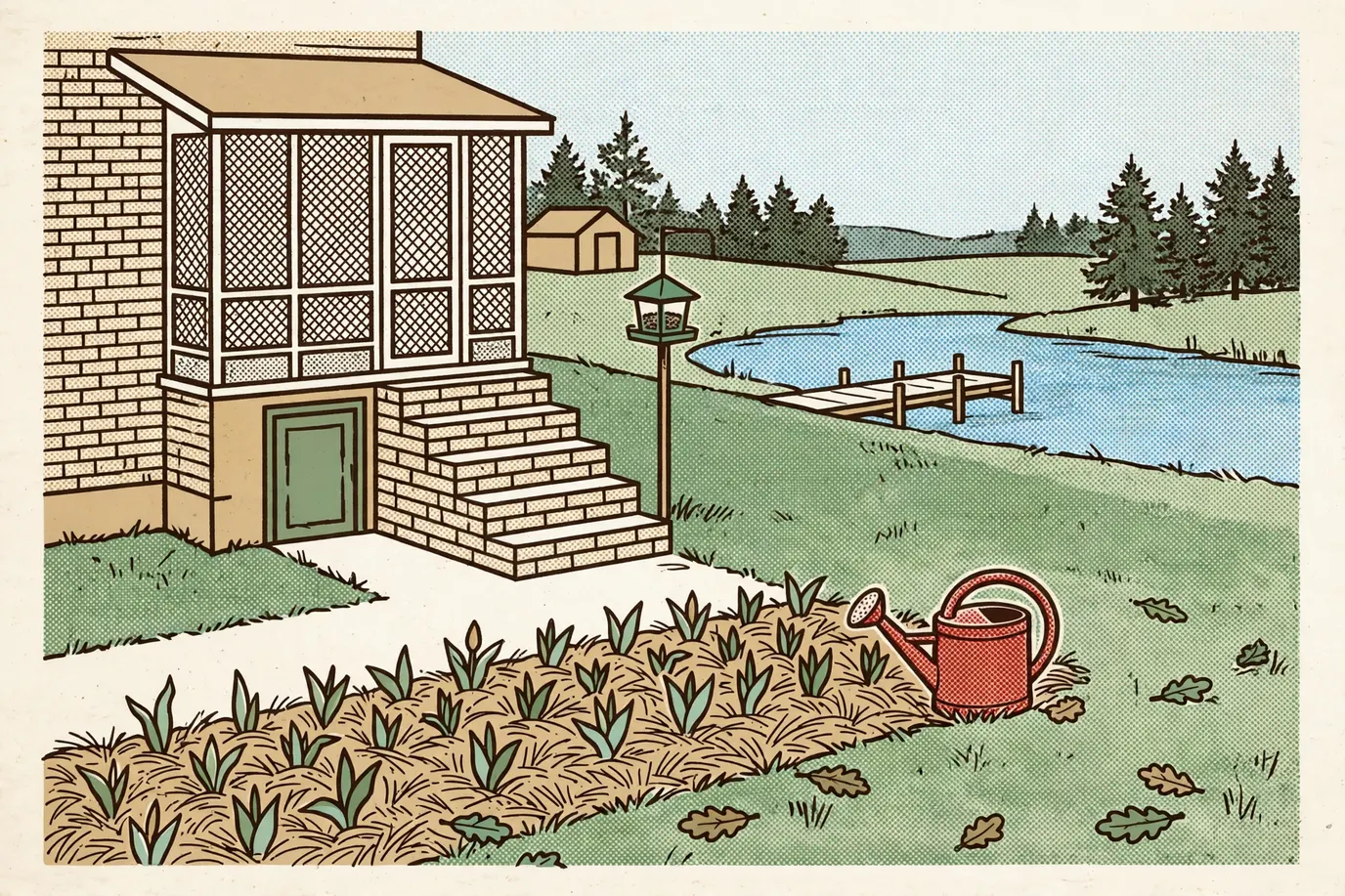
Planting is only half of it. What you do in May decides how next spring looks.
- Snip off the spent flowers as soon as the petals drop. Iowa State says this saves the plant's energy.
- Leave the leaves. Let them turn brown and die back on their own, which Iowa State says can take until late June or early July. Cut them early and you cut next year's flower.
- Keep the weeds down around them, by hand.
Even with good care, Iowa State notes that most large-flowered modern tulips bloom well for only 3 or 4 years, so many gardeners treat them as annuals. In warm-winter areas, NC State Extension's Wayne County office says tulips are often replanted every year. That isn't a sign you did something wrong. It's how most garden tulips are built.
Tulip, daffodil, hyacinth and amaryllis bulbs are toxic to dogs and cats. Store and plant them where pets can't dig them up.
A planting-day checklist
- Sunny, well-drained spot
- Bed loosened to depth, compost worked into clay
- Bulbs pointed end up, 6–8 in deep (3–5 in for small types), measured from the base
- 4–6 in apart, in groups of five or more
- One good watering, then 2–3 in of mulch
- A note in your notebook: date, variety, how many
That last item isn't from any extension bulletin. It's from me, and it's the only one on the list I'd call non-negotiable.
Happy watching.
Questions people ask
How deep do you plant tulip bulbs?
Iowa State University Extension says 6 to 8 inches for larger tulips and 3 to 5 inches for smaller types such as Kaufmanniana, Greigii and species tulips. Illinois Extension's rule is two to three times as deep as the bulb is tall, measured from the base of the bulb.
How far apart should you plant tulip bulbs?
Iowa State University Extension spaces larger tulip bulbs 4 to 6 inches apart and smaller ones 3 to 4 inches apart. It also suggests planting in groups: at least five of one variety for large tulips, with 10 or more looking best.
Which way up do tulip bulbs go?
Pointed end up, root plate down. Illinois Extension gives the same rule for tulips, daffodils and hyacinths. The flat, slightly rough base is where the roots grow from.
Should I water tulip bulbs after planting?
Yes, once, to settle the soil around the bulbs and start root growth. Illinois Extension warns that overwatering can rot bulbs, so don't keep the bed soggy. In spring, once buds appear, it suggests about an inch of water a week if rain doesn't supply it.
Do tulip bulbs need fertilizer at planting?
Not usually. Iowa State University Extension says fertilizer typically isn't necessary at planting. If you use some, work it into the soil below the bulbs, since Illinois Extension notes that phosphorus barely moves in soil.
Save this guide for later
Sources
- Iowa State University Extension and Outreach, Yard and Garden: All About Tulips — accessed 2026-10-24
- University of Illinois Extension: Planting Bulbs — accessed 2026-10-24
- NC State Extension, Wayne County Center: Plant Bulbs This Fall for Spring Flowers (Oct 30, 2025) — accessed 2026-10-24
- ASPCA Animal Poison Control: Tulip — accessed 2026-10-24