Why a heated bird bath matters in winter
Birds need water in winter as much as they need seed. Penn State Extension puts it simply: birds need drinkable water, and it's often hard to find in icy weather. A puddle that froze overnight is no help to a chickadee at 7 a.m.
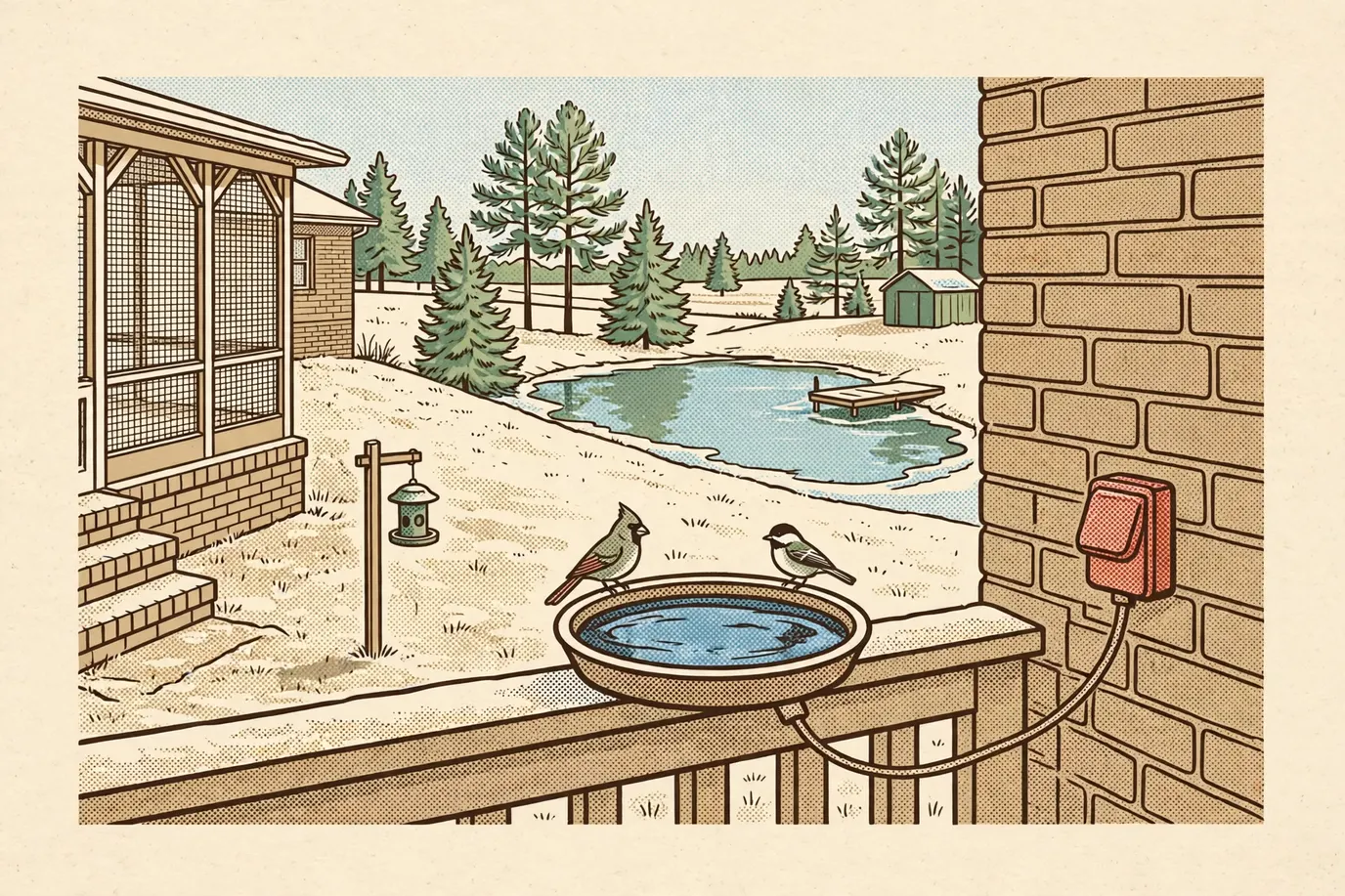
A heated bird bath keeps a small bowl of water open when everything else outside is ice. The heater sits under or inside the bowl. Most switch on only when the water gets near freezing, if the maker builds in a thermostat. Then you keep the bowl full, keep it clean and keep the cord safe.
The National Audubon Society suggests two ways to do it: buy a plastic birdbath with a built-in heater, or add a heater to a summer bath. This list covers the first kind. Every bath in the table has a heater built in, as the maker or listing states.
How to pick the best heated bird bath
Five things decide it. The listing should state most of them, and where it doesn't, the table shows a dash.
- Mount: ground, pedestal or deck railing
- Heater wattage: how much power the heater draws
- Thermostat: whether the heater turns itself on and off
- Electrical listing: UL, ETL or CSA, where stated
- Bowl size and depth: how many birds fit, and how deep the water is
Start with the mount, because the outlet won't move
Here's the one opinion on this page, and you can check it against your own house: choose the mount by where your outdoor outlet is, then choose everything else. A heated bath only works where its cord reaches a safe outlet. The outlet decides the spot, and the spot decides the mount.
On this list there are three kinds:
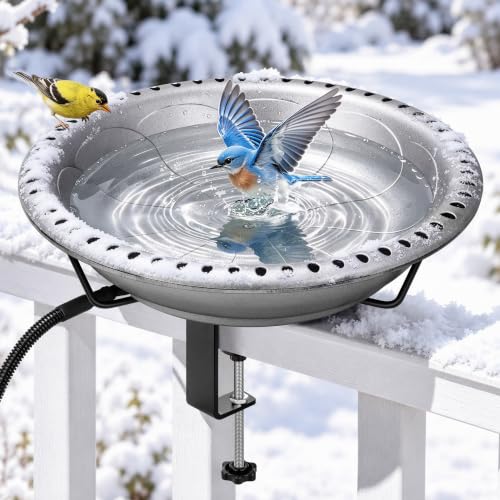
- Deck mount. Clamps to a porch or deck railing. Listings that state deck mount include the 20-inch API 650 and the VIVOHOME railing bath.
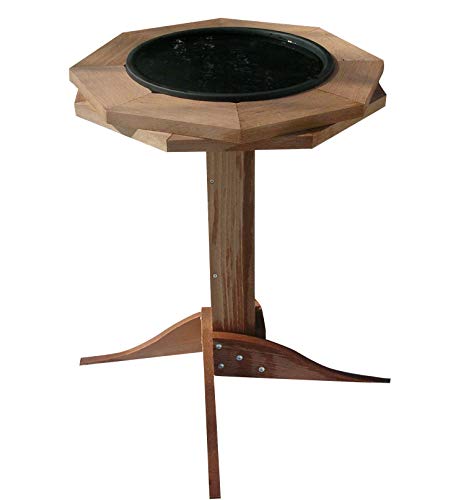
- Pedestal. Stands in the yard on its own base. The API 400 listing states pedestal.
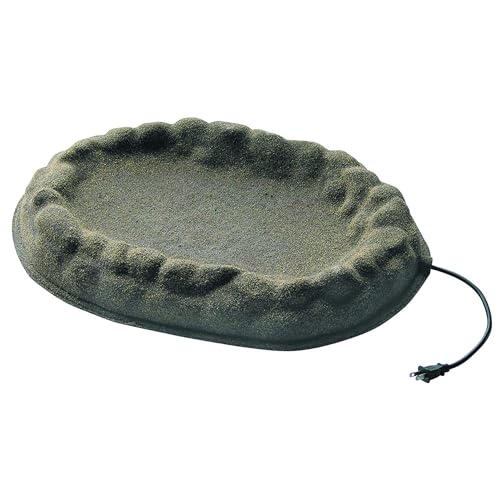
- Ground or tray. Sits on the ground or any flat surface. The Farm Innovators Four Seasons listing states ground or tray.
The VIVOHOME dual-zone bath's title says 2-way installation, so it can go more than one place. The rest of the listings don't state a mount, so check the photos and the description before you order.
A deck mount has one more thing going for it in our house. It's where you can see it from the kitchen while the kettle heats. In January, I'll take my bird watching with the heat on.
Heater wattage: lowest first, and why the list sorts that way
Wattage is how much power the heater draws while it's running. The list is sorted lowest listed wattage first. On this page you'll see 60 watts on the Songbird Essentials Heated Birdbath, 70 watts on the Farm Innovators Four Seasons listings and 150 watts on the API 650.
Lower wattage isn't automatically better. A bigger bowl has more water to keep open, so the 20-inch API 650 carries a 150-watt heater. The point of sorting this way is that you can see the trade-off at a glance: a smaller bowl and a smaller heater, or a bigger bowl and a bigger one.
Some listings don't state wattage at all. They sit at the end of the list, not because they're worse, but because we can't place them on the scale. If wattage matters to you, the maker's manual or the box will usually say.
Thermostat: the line that decides how often it runs
A thermostat turns the heater on when the water gets close to freezing and off when it doesn't need to run. The Iowa Department of Natural Resources notes that many birdbath heaters use thermostats to save electricity.
Listings that state a thermostat include the Songbird Essentials Heated Birdbath, both Farm Innovators Four Seasons listings and both VIVOHOME baths. The VIVOHOME titles call it automatic temperature control.
If a listing doesn't state a thermostat, don't assume it has one. Check the manual before you leave it plugged in from November to March.
Electrical listing: UL, ETL or CSA
An electrical listing means a testing lab such as UL, ETL or CSA has checked the product against a safety standard. On this page, the API 400 listing states UL.
That doesn't mean the others have not been tested. It means their listing doesn't say so, and this page only shows what's stated. If an electrical listing matters to you, and for something plugged in outside next to water it's a fair thing to care about, look for the mark on the product, the box or the manual.
Bowl size and depth
Bowl diameter tells you how many birds can line up at once. Stated sizes on this list include a 12-inch bowl on the API 400, 13 inches on the VIVOHOME railing bath, 14 inches on the Songbird Essentials and 20 inches on the API 650.
Depth matters too. The Songbird Essentials Heated Birdbath listing states 1 inch of water, and the VIVOHOME railing bath states 1.9 inches. The VIVOHOME titles give a 0.6-gallon capacity. Neither number is a promise about which birds come. It just tells you how often you'll be out with the watering can.
Field note: a wide bowl in January is mostly a drinking fountain. Some birds will bathe on a mild winter day, but most of the line at our porch rail is there for a sip. The log has a column for bathers. It is short in January.
A heated bath or a heater for the bath you have
If you already own a summer bird bath, you have a choice. Audubon describes both routes: buy a plastic bath with the heater built in, or convert the summer bath by adding a heater. The Iowa DNR mentions clip-on heaters made for outdoor use, and the National Wildlife Federation describes immersion-style heaters that sit in the water.
A built-in heater keeps everything in one piece, with one cord and one set of instructions. An add-on heater keeps the bath you like. Check two things before you go that way: whether your summer bath can take a freeze, since Audubon warns that ceramic can crack, and whether the heater's maker says it works with your bath's material and depth.
Keep the cord and the outlet safe
A heated bird bath is an electric heater sitting in water, outdoors, in the worst weather of the year. Treat it that way.
- Plug it into a GFCI-protected outlet. The National Wildlife Federation advises a ground-fault circuit to guard against electric shorts.
- Keep the cord and outlet out of the snow and ice. The same source says to check that cords and outlets are sheltered from snow and ice buildup.
- Use only what the maker allows. If the manual says no extension cord, don't use one. If it allows one, use a cord rated for outdoor use.
- Unplug it before you touch the water, to clean, to refill or to move it.
- Follow the maker's instructions for mounting and placement.
Dell's take, and he didn't smile when he said it: "If the outdoor outlet doesn't have a GFCI and a cover, fix the outlet first. Then buy the bath." I agree with him. That's a call for an electrician, not a weekend project.
Never use antifreeze, and other winter rules
A frozen bird bath tempts people to try shortcuts. Don't.
The Iowa Department of Natural Resources says never to add automotive antifreeze to a bird bath, because ethylene glycol is toxic. It also warns that glycerin, another antifreeze ingredient, is toxic to birds, causing dangerous blood-sugar spikes and matted feathers.
A few other rules from the sources on this page:
- Refill often. Audubon notes that frequent refills are needed in winter because the water evaporates quickly in dry air. The National Wildlife Federation notes that newer heaters shut off if the water evaporates, which protects the heater but leaves the birds a dry bowl.
- Skip ceramic in a freeze. Audubon advises avoiding ceramic baths in winter because they can crack.
- Give birds a perch. The Iowa DNR suggests laying a few sticks across the top so birds can drink without getting soaked in the cold.
Clean it on a schedule, winter included
Winter doesn't pause the cleaning. The Iowa Department of Natural Resources suggests a weekly scrub and fresh water for bird baths, and Audubon recommends a stiff brush and skipping synthetic soaps, which can strip the oils from feathers.
Unplug the heater first. Then follow the maker's cleaning instructions, especially for any bath with a removable bowl or a detachable cord, like the VIVOHOME baths, where the listing states both.
In our house the bath gets scrubbed on the same morning the feeders do, so neither gets forgotten. That's the only filing system that survives a Piedmont January. The rest of my systems move indoors with the houseplants.
Who should skip this list
Not every yard needs a heated bird bath.
If your winters rarely freeze, a regular bath with fresh water each morning will do the job without a cord. If you don't have an outdoor outlet you can reach safely, with GFCI protection and a cover, don't buy a heated bath until you do. And if you won't be home to refill it through the winter, a heated bowl that runs dry does nobody any good, the birds included.
The Admiral, our gray squirrel, will drink from it either way. He considers it part of the service.
How this list was picked
The pick rule, in full. We started from every bird bath in our Amazon US data and kept the ones whose maker or listing states a built-in heater. We sorted them by listed heater wattage, lowest first. Baths whose listing doesn't state a wattage come last. A thermostat and an electrical listing such as UL, ETL or CSA appear in the table only where the maker states them.
Nobody here has filled, plugged in or watched these baths through a winter. The specs are what the makers and listings state, read in late October 2026, and the table updates as listings change. If a maker adds a thermostat or a UL mark to a listing, the table picks it up.
Happy watching.